

Published
12 minute read
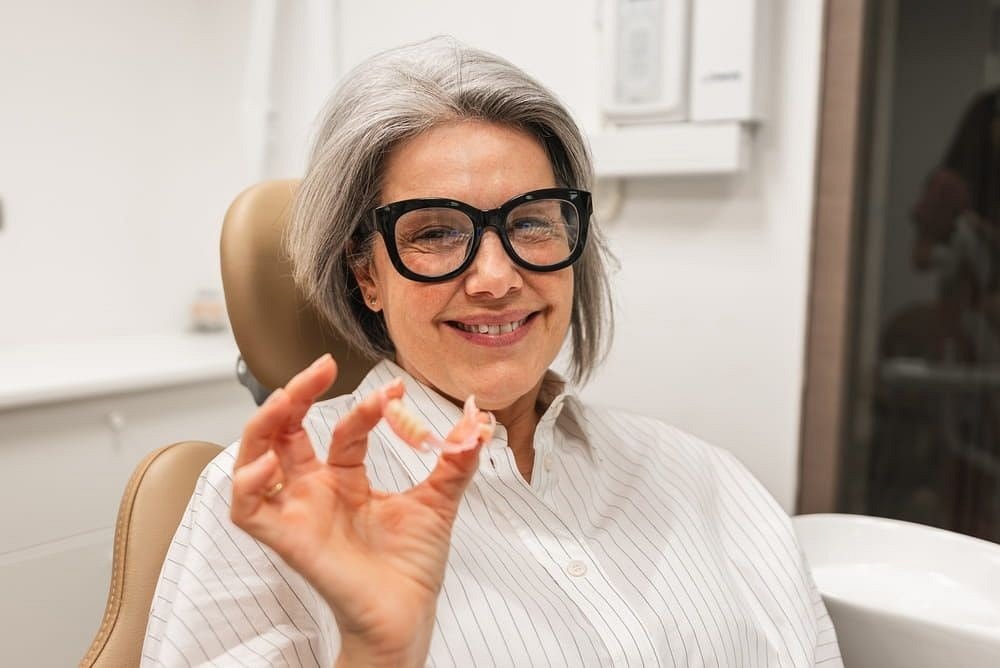
When most or all teeth in an upper or lower arch are missing, replacing them can make a significant difference in everyday function. However, not every full-arch tooth replacement works the same way. Traditional removable dentures rest primarily on the gums and supporting tissues, while an All-on-4 approach uses dental implants to support a full-arch restoration. For patients comparing these options, the most meaningful differences often become apparent not in technical descriptions but during ordinary activities such as eating breakfast, speaking with friends, cleaning the teeth, or leaving home for the day. At New Teeth Chicago Dental Implants in Chicago, IL, Dr. Irfan Atcha serves as a resource for patients learning about full-arch tooth replacement and how different approaches can affect daily routines.
Neither option should be viewed as universally better for every patient. Traditional dentures remain a widely used method for replacing extensive tooth loss, while implant-supported approaches can provide additional stability for appropriate candidates. Anatomy, bone condition, general health, oral hygiene, cost, maintenance expectations, and personal priorities can all influence treatment decisions. Understanding how the options differ from morning to night can make the comparison easier to put into practical terms.
Traditional complete dentures are removable prosthetic appliances designed to replace an entire arch of missing teeth. An upper denture typically gains support and retention from the tissues and shape of the palate and residual ridge, while a lower denture rests on the lower ridge and must function alongside the movements of the tongue, cheeks, and floor of the mouth.
An All-On-4 Implants approach is fundamentally different because implants are placed in the jaw to support a full-arch prosthesis. Rather than relying primarily on the gums for stability, the restoration transfers functional forces through implants positioned within the supporting bone. The term “All-on-4” generally describes a treatment concept in which a complete arch of replacement teeth is supported by four strategically positioned implants.
This distinction influences many of the day-to-day differences patients notice. Traditional dentures remain removable and interact directly with the gums, while an implant-supported fixed restoration is designed to remain more stable during ordinary function. The exact design of an implant-supported restoration can vary, so patients should understand specifically whether a proposed prosthesis is fixed, removable, or designed for professional removal.
A person wearing conventional dentures may begin the morning by cleaning and inserting the prosthesis. Depending on the individual denture and oral anatomy, an adhesive may be used to improve retention. Dentures should be cleaned regularly, and the gums, tongue, and other oral tissues also require daily hygiene.
A fixed implant-supported restoration changes that routine because the patient does not normally remove the prosthesis every night and reinsert it each morning. Instead, daily care occurs while the restoration remains in place. That can make the teeth feel more like a permanent part of the daily routine, although they still require specialized cleaning.
The convenience of not removing a fixed restoration should not be confused with maintenance-free dentistry. Food debris and bacterial plaque can accumulate around and beneath implant-supported prostheses. Daily cleaning remains essential for protecting the gums and tissues surrounding the implants.
Eating is one of the activities most affected by complete tooth loss. Traditional dentures can restore substantial function, but they do not reproduce the biomechanics of natural teeth. Because the prosthesis rests on oral tissues, certain foods may cause movement or create uncomfortable pressure.
New denture wearers frequently learn to take smaller bites, chew on both sides more evenly, and approach hard or sticky foods carefully. Adaptation can improve with practice, but individual experiences vary based on denture fit, ridge anatomy, saliva, muscle coordination, and other factors.
Implant-supported full-arch restorations can provide greater stability because the restoration is supported by implants rather than depending solely on the underlying gums. However, this does not mean patients can immediately eat anything they want after implant placement. During healing, dietary restrictions may be necessary to protect the implants and developing bone-to-implant interface. Long-term recommendations can also depend on the materials used in the final restoration and the patient’s bite.
For some traditional denture wearers, the possibility of movement is more concerning than the actual chewing limitation. A lower denture in particular can be challenging because there is less surface area available for support and because the tongue and surrounding muscles are constantly moving.
Concern about a denture shifting may make some individuals cautious at restaurants or social gatherings. They may choose foods based on what is easiest to manage or avoid certain meals altogether. A well-made denture can provide meaningful function, but the experience is different from having a restoration anchored by implants.
Patients who want additional denture stability may also encounter Implant Supported Dentures. This category includes different prosthetic designs and should not automatically be considered identical to All-on-4. Some implant-supported dentures remain removable by the patient, while other implant-based restorations are fixed.
Teeth and oral structures contribute to speech by helping the tongue and lips form specific sounds. Replacing an entire arch of teeth changes the shape and dimensions of the oral environment, which means some adjustment should be expected regardless of the restoration selected.
Traditional dentures may initially feel bulky, and certain sounds may require practice. If a denture moves while speaking, the wearer may become particularly aware of it. Reading aloud and practicing difficult words can help some people become accustomed to the prosthesis.
A fixed full-arch restoration may feel more stable during speech, but it can still change tongue space, tooth position, and the way air moves through the mouth. Patients may therefore need time to adapt after treatment. Persistent speech concerns should be discussed with the dental team because the shape, position, or contours of a restoration can sometimes contribute to the problem.
Daily denture hygiene involves more than brushing the visible teeth. Dentures should be removed and cleaned according to professional recommendations to reduce food debris, plaque, stains, and microorganisms. Abrasive household products or inappropriate cleaning methods can damage denture materials.
The tissues beneath the denture also need attention. Even though natural teeth may no longer be present, the mouth still requires routine care. The gums, tongue, palate, and remaining oral structures should be kept clean, and professional examinations remain important for evaluating tissue health and denture fit.
Dentures also need to be handled carefully when they are outside the mouth. Dropping a prosthesis can damage it, and changes in oral anatomy over time may cause a previously comfortable denture to become less stable. Adjustments, relining, repair, or eventual replacement may therefore become part of long-term care.
Cleaning around a fixed implant-supported restoration requires a different technique. A conventional toothbrush can clean many exposed surfaces, but additional tools may be necessary to reach beneath the prosthesis and around implant components.
Depending on the design, patients may be advised to use floss threaders, interdental brushes, specialized implant floss, or an oral irrigator. The objective is to disrupt bacterial plaque and remove debris from areas that an ordinary toothbrush cannot adequately reach.
This routine can take practice. Patients sometimes assume that artificial teeth cannot develop dental disease because they cannot decay like natural enamel. While the prosthetic teeth themselves do not develop cavities, the tissues surrounding dental implants can develop inflammation and disease. Long-term implant health therefore depends partly on consistent hygiene and professional monitoring.
Traditional denture wearers may choose to carry adhesive, a denture case, or cleaning supplies, particularly when traveling or spending an entire day away from home. This is not necessarily burdensome, but it becomes part of planning for some individuals.
A stable fixed restoration can reduce concerns about removing the teeth or managing movement during routine social activities. For some patients, that difference contributes to greater confidence when speaking, laughing, eating, or participating in photographs.
However, confidence is highly individual. Many people function successfully with traditional dentures and are comfortable wearing them. Others place a high priority on having teeth that remain more stable throughout the day. These personal preferences deserve consideration alongside clinical factors.
Traditional dentures are generally removed for cleaning and to provide the supporting oral tissues with a period without continuous denture coverage. Specific instructions should be individualized, particularly when a patient has recently received a new denture or undergone oral surgery.
A fixed implant-supported restoration usually remains in the mouth overnight. Instead of placing the teeth in a denture container, the patient performs oral hygiene around the restoration before sleeping, much as someone with natural teeth would complete a nighttime cleaning routine.
For patients interested specifically in teeth designed to remain in place, information about Fixed Dentures can help explain how fixed implant-supported restorations differ from removable prostheses. The terminology used for full-arch restorations can sometimes be confusing, so patients should ask exactly how a proposed prosthesis is retained and who can remove it.
Traditional dentures replace the visible teeth but do not place implant fixtures within the jawbone. After natural teeth are lost, the residual ridge can continue changing in shape and volume. These changes can contribute to differences in denture fit over time.
Dental implants interact differently with the jaw because they are placed within bone and become integrated through osseointegration. Once appropriately healed, they can provide anchorage for a restoration and transfer functional forces into surrounding bone.
Bone availability still matters when considering implant treatment. Patients with significant bone loss may require additional evaluation or alternative treatment strategies. In selected cases involving severe upper-jaw bone deficiency, specialized approaches such as Zygomatic Implants may be considered. These are advanced treatment concepts and are not necessary or appropriate for most patients.
It is important to compare more than the initial treatment cost. Traditional dentures can require adjustments, relines, repairs, and eventual replacement as the prosthesis wears and oral tissues change.
All-on-4 restorations also have long-term maintenance requirements. Prosthetic teeth can wear or become damaged, screws or other components may require attention, and professional maintenance is necessary. The implants and surrounding tissues must also be monitored for signs of inflammation or other complications.
Patients comparing treatment costs should therefore ask what maintenance is expected over several years rather than considering only the initial fee. Understanding repair procedures, professional cleaning needs, warranties where applicable, and potential replacement of prosthetic components can provide a more realistic financial comparison.
The difference between traditional dentures and All-on-4 becomes easier to understand when patients think about what matters most during an ordinary day. Some prioritize affordability and avoiding implant surgery. Others place greater emphasis on stability, fixed teeth, chewing confidence, or reducing concerns about denture movement.
Medical and anatomical considerations are equally important. Implant treatment requires surgical evaluation, sufficient supporting anatomy or an appropriate alternative strategy, and the ability to maintain the restoration over time. Traditional dentures may be suitable for people who do not want surgery or are not appropriate implant candidates.
Neither decision should be made solely from before-and-after photographs or generalized claims about what is “best.” A thorough examination can help determine which options are clinically realistic and how their benefits, limitations, maintenance requirements, and costs compare for a particular patient.
All-on-4 and traditional dentures ultimately pursue a similar objective: replacing missing teeth so a person can regain oral function and appearance. The major difference lies in how the replacement teeth are supported. That distinction can influence eating, speaking, cleaning, sleeping, maintenance, and how stable the teeth feel throughout the day.
Traditional dentures can provide an effective solution for extensive tooth loss, but they require adaptation to a removable prosthesis that rests on oral tissues. All-on-4 uses implant support to create a more stable full-arch foundation, but it involves surgery, biological healing, careful hygiene, and ongoing professional maintenance.
For patients in Chicago comparing these approaches, New Teeth Chicago Dental Implants and Dr. Irfan Atcha can provide educational information about full-arch tooth replacement and implant-based treatment concepts. Understanding what each option means during breakfast, work, dinner, social activities, oral hygiene, and bedtime can help patients evaluate tooth replacement based not only on how a restoration looks, but also on how it may fit into everyday life.
Feine, J. S., Carlsson, G. E., Awad, M. A., Chehade, A., Duncan, W. J., Gizani, S., Head, T., Lund, J. P., MacEntee, M., Mericske-Stern, R., Mojon, P., Morais, J. A., Naert, I., Payne, A. G. T., Penrod, J., Stoker, G. T., Tawse-Smith, A., Taylor, T. D., Thomason, J. M., Thomson, W. M., & Wismeijer, D. (2002). The McGill Consensus Statement on Overdentures. International Journal of Prosthodontics.
Thomason, J. M., Feine, J., Exley, C., Moynihan, P., Müller, F., Naert, I., Ellis, J. S., Barclay, C., Butterworth, C., Scott, B., Lynch, C., Stewardson, D., Smith, P., Welfare, R., Hyde, P., McAndrew, R., Fenlon, M., Barclay, S., & Barker, D. (2009). Mandibular Two Implant-Supported Overdentures as the First Choice Standard of Care for Edentulous Patients. British Dental Journal.
Malo, P., Rangert, B., & Nobre, M. (2003). All-on-Four Immediate-Function Concept With Brånemark System Implants for Completely Edentulous Mandibles: A Retrospective Clinical Study. Clinical Implant Dentistry and Related Research.



