Ceramic Implants

Versatile Options Designed for You
Ceramic dental implants provide a metal-free implant option for replacing missing or failing teeth. Instead of using titanium, these implants are made from high-strength, tooth-colored zirconia and can support single teeth, bridges, or even full-arch restorations. Ceramic implants are increasingly popular among patients who prefer to keep their bodies free of metal implants.
At New Teeth Chicago Dental, you work with Dr. Irfan Atcha, a dental implant specialist with more than 30 years of experience treating simple and complex cases. Patients with high dental anxiety, past failed implants, or advanced bone loss come to us for everything from single implants to full-mouth solutions, including zygomatic and All-on-4 style treatments. Learn how zirconia implants can help you enjoy a strong, healthy smile for life, on your own terms.

Provides a metal-free implant alternative with high aesthetic appeal, a natural appearance, reduced plaque accumulation, and improved gum health.
Surgical implant placement of biocompatible zirconium dioxide posts beneath the gums, paired with ceramic abutments and custom porcelain crowns or bridges.
Most patients return to normal daily routines within 24 to 48 hours after placement, with full bone integration occurring over 3 to 6 months.
Patients missing one, several, or all teeth who prefer non-metal dental implants, have metal allergies or autoimmune health concerns, or have thin gum tissue that could make titanium implants visible under the gum line.
A Metal-Free Option for Your Smile
Ceramic implants are dental implants made from zirconia, a strong, tooth-colored ceramic material instead of metal. Like traditional titanium implants, they act as artificial tooth roots placed into the jawbone to support a crown, bridge, or full arch of teeth. The goal is to replace missing teeth in a way that feels solid when you chew and looks like a real tooth when you smile.
Patients choose ceramic implants for different reasons. Whether you prefer a more holistic, metal-free option, have a metal allergy, or have thin gum tissue that could allow titanium posts to show through, Dr. Atcha will design a treatment plan tailored to your needs. Ceramic implants can be used on their own, combined with other implant types, or included in a full-mouth plan that may also involve porcelain veneers, crowns, or All-on-4 style treatment for a complete smile makeover.
While zirconium starts as a metal, oxidation transforms the implant body into a hard, crystalline ceramic. The oxidized implant contains no free metal ions and is non-conductive to heat or electricity. Once placed at the implant site, this biocompatible material integrates naturally with living bone tissue to anchor a custom porcelain crown or bridge.

Precision and Care in Every Step
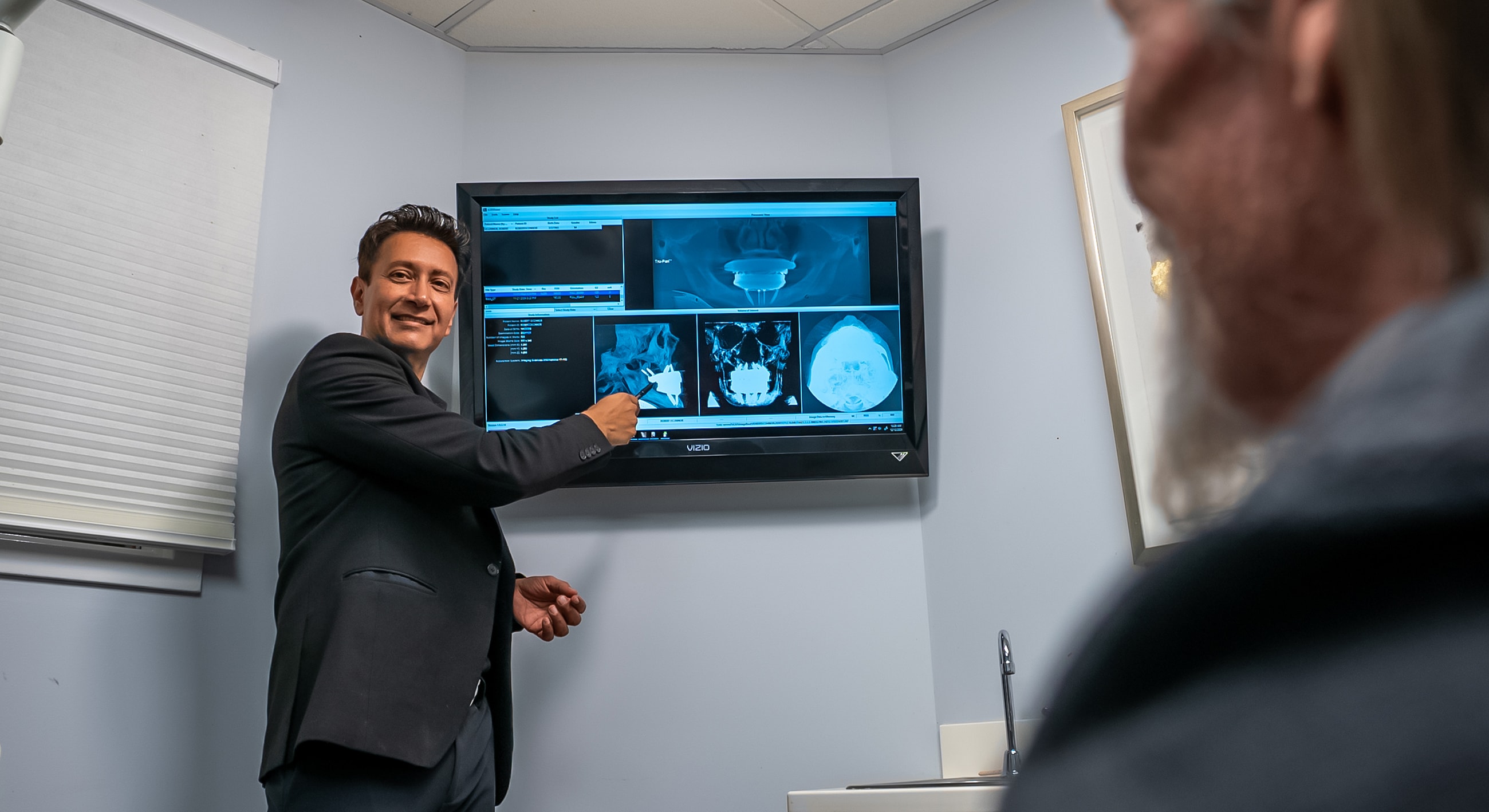
Your care begins before treatment day with high-resolution 3D digital imaging. Dr. Atcha maps your bone density, nerve pathways, and gum thickness to plan the exact placement angle and depth of each zirconia post. On the day of your appointment, our dental team prioritizes your comfort from start to finish, offering oral or IV sedation so you rest peacefully throughout the procedure.
After thoroughly numbing the area, Dr. Atcha places the ceramic implant into the jawbone. Depending on your bone stability, he may place a lifelike temporary tooth during the same visit, so you leave our Chicago office with a full, functional smile. Over the following 3 to 6 months, your jawbone fuses tightly around the zirconia post. Once healing is complete, we secure your final, custom-shaded porcelain crown or bridge. The restored teeth look, function, and feel just like natural teeth and are designed to last for decades, or even a lifetime, with proper care.

When Your Smile Needs a New Solution
Ceramic implants can address a range of dental and oral health concerns that affect chewing, speech, and confidence.
A ceramic implant with a custom crown can replace a single missing tooth without involving the neighboring teeth.
Two or more ceramic implants can support a bridge, helping you avoid a removable partial denture.
For people missing all or most teeth in the upper or lower jaw, ceramic implants can be part of full mouth treatment, often combined with advanced planning similar to All-on-4 full arch implants.
When older dental work breaks down or teeth cannot be saved, ceramic implants may offer a long-term replacement once unhealthy teeth are removed.
Implants can stabilize or replace removable dentures, helping you eat a wider range of foods and feel more confident in social settings.
Because zirconia is tooth-colored, ceramic implants can pair well with porcelain veneers and crowns as part of a coordinated smile makeover.

The Advantage of Zirconia
Zirconia is gentle on soft tissue, encouraging the gums to hug the implant collar tightly, just like real teeth. With no metal anywhere in the restoration, patients who prefer or need a metal-free option can enjoy a natural, tooth-colored restoration.
Functionally, ceramic implants offer strength and stability so you can enjoy your favorite meals without hesitation. Unlike traditional dental bridges, which require grinding down healthy enamel on neighboring teeth, a ceramic implant stands independently, protecting your surrounding teeth. Additionally, zirconia has a smooth surface that promotes healthy gum integration and reduces plaque accumulation.
You will care for your smile just like you would your natural teeth, with daily brushing and flossing and regular dental checkups. With proper care, your implants will last for decades, letting you eat, speak, and smile with confidence.
Finding Your Perfect Fit
Most adults in good general health who are missing one or more teeth qualify for ceramic dental implants. Ideal candidates have healthy gums and sufficient jawbone volume and density to stabilize the post. If you have experienced bone loss after losing a tooth, preliminary bone grafting may be performed to rebuild a solid foundation before placing a ceramic implant.
Certain health and lifestyle factors require special consideration or extra preparation to prevent implant failure. Ceramic has historically been a more brittle material than metal under extreme off-angle forces. Conditions like heavy teeth grinding (bruxism), uncontrolled diabetes, active gum disease, or recent radiation therapy to the jaw can place extra stress on the implant body or slow bone healing. Smoking also negatively impacts healing, and patients may be required to quit before proceeding. During your consultation, Dr. Atcha evaluates your bite forces, 3D scans, and medical history to determine whether zirconia implants are a good fit. Preliminary therapies can often be performed to lay the groundwork for a successful ceramic implant procedure.

A Beautiful Smile Built to Last
After ceramic implant placement, you can expect some soreness and swelling for a few days. Most people manage this with over-the-counter pain relief and cold compresses, and many return to desk work or daily tasks within 2 to 3 days. You will be given clear guidance on eating softer foods at first, keeping the area clean, and avoiding habits such as smoking that can slow healing.
Follow-up visits are important so the team can monitor the implant site, check your bite, and answer questions. If you have dental anxiety, appointments can be paced and explained carefully so you always know what is coming next. The internal healing, where the bone fuses with the ceramic implant, usually takes several months. Taking this healing phase seriously gives your final crown or bridge a better foundation.
As the implant heals and your final restoration is made, your smile starts to feel more like a part of you instead of something you hide or worry about. When the permanent ceramic crown, bridge, or full arch is attached, you can usually eat, speak, and smile more comfortably than you could with missing teeth or loose dentures.
Implant-supported teeth are meant to be a long-term solution, but their lifespan depends on daily care, regular checkups, and habits such as not using your teeth as tools. With good home care and professional cleanings, many patients enjoy stable function and natural-looking results from their ceramic implants for years.
Your Smile, Your Priorities, Your Plan
Dr. Irfan Atcha is a Diplomate implantologist and cosmetic dentist, nationally recognized for his skill in complex implant cases. With over 30 years of experience in implant dentistry, he meticulously plans every treatment to restore strength, function, and a natural look and feel, providing you with a smile that truly shines. He is known for finding an effective solution for every patient, including those who have been told elsewhere that implants are not an option. His versatile techniques include ceramic implants for patients seeking a metal-free restoration.
At New Teeth Chicago, we specialize in helping anxious patients feel comfortable with personalized sedation options and efficient techniques backed by deep expertise. With flexible financing options and a patient-first philosophy, we make high-quality restorative dental care accessible and rewarding.
Modern medical-grade zirconia ceramic implants possess high bending strength and are engineered to withstand normal daily biting and chewing forces. Every clinical study comparing zirconia and titanium implants shows comparable survival rates in single-tooth and bridge cases when properly planned, though titanium remains slightly more flexible under extreme heavy grinding forces.
Yes, ceramic implants are 100 percent metal-free. Although zirconium is listed as a metal on the periodic table, converting it into zirconium dioxide creates an inert, non-metallic ceramic material that will never corrode, release metal ions, or trigger allergic reactions.
Zirconia dental implants have been used in Europe and North America for more than two decades, receiving FDA clearance in the United States in 2011. Ongoing improvements in production and surface treatment have given modern ceramic implants bone-integration success rates comparable to traditional titanium posts.
In many cases, yes. If you have healthy surrounding bone and no active infection at the extraction site, Dr. Atcha can often remove a failing tooth, place the ceramic implant, and attach a lifelike temporary crown during the same appointment.
No, zirconia ceramic is naturally non-porous and highly resistant to staining from coffee, tea, red wine, or food pigments. Both the implant post beneath your gums and your custom porcelain crown maintain their bright, natural shade for years.
Ceramic implants generally represent a slightly higher investment than standard titanium implants due to the specialized manufacturing of medical-grade zirconia and custom ceramic prosthetics. During your consultation, we provide a clear, itemized fee breakdown and review flexible monthly financing options.
Yes, because zirconia ceramic is completely non-magnetic and non-conductive, ceramic implants do not interfere with MRI imaging or set off security scanners, making them convenient for patients who require routine medical imaging.
You care for ceramic implants just like natural teeth by brushing twice daily with a soft-bristle toothbrush and non-abrasive toothpaste, flossing gently around the gum line, and visiting our office every six months for professional cleanings.
Yes, patients seeking a completely metal-free full-arch restoration can pair zirconia implant posts with a custom monolithic zirconia bridge. Dr. Atcha evaluates your bone density and bite alignment using 3D scans to design a durable, metal-free full-mouth solution.
"A life-changing experience"



