

Published
5 minute read
Although dental implants are considered a permanent solution for missing teeth, they are not immune to emergencies. In fact, implant emergencies can be quite serious and require immediate attention. If you experience a dental implant emergency, do not panic! There are several things you can do to protect your implant until you can see your dentist. In this blog post, we will discuss what constitutes a dental implant emergency and what you should do if one occurs.
Dental implants are a permanent solution for missing teeth. They are made of titanium, which is biocompatible, and they are surgically implanted into the jawbone. Because of this, they are extremely strong and are resistant to damage. Even in cases where an implant-supported restoration, such as a crown or bridge, becomes damaged, the implant itself is usually fine.
Despite the strength of dental implants, there is still a possibility of experiencing an emergency with your dental implants. When it comes to dental implants, there are two main types of dental emergencies that can occur:
Trauma to the implant or surrounding area is the most common dental implant emergency. If you experience any trauma to your mouth, such as a fall or a car accident, please seek medical attention immediately. In some cases, trauma can be due to something as simple as biting down on something hard.
You may notice something is wrong immediately after the traumatic event, or you may not. If your implants are still healing, you may notice them becoming loose or a change in position. Even if you are not in pain, it is important to have any injury evaluated by a doctor because damaged implants can lead to infection and may require surgery to repair.
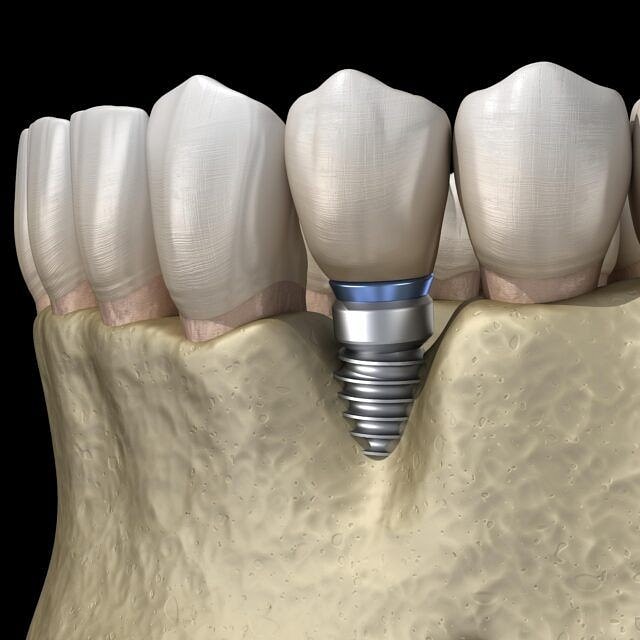
Another common dental implant emergency is peri-implantitis, a type of gum disease that affects the soft and hard tissues surrounding the implant. In its mild form, the disease is known as peri-implant mucositis and only causes inflammation in the gum tissue. As the condition progresses into peri-implantitis, bone loss can be experienced in addition to the gum inflammation.
This condition can be quite serious, especially if it has resulted in significant bone loss around the implant, and may require antibiotics or surgery to treat. If you experience any symptoms of peri-implantitis, such as redness, swelling, a bad taste in your mouth, swollen lymph nodes, or bleeding gums, please contact your dentist immediately. It is extremely important to have peri-implantitis treated as soon as possible to limit the damage to your mouth and implants.
There are some cases where the dental implant itself is fine, but the implant-supported restoration may be damaged. There are three types of restorations that are used in coordination with dental implants: crowns, bridges, or dentures. Although damage to these restorations can affect your appearance and make certain activities more difficult, it is not considered an emergency since there is no underlying tooth that can become infected. However, it is still important to contact your dentist to get the restoration fixed.
If you experience a dental implant emergency such as trauma or peri-implantitis, the first thing you should do is call your implant dentist. Depending on your situation, they may have you come in immediately or within the next few days. They may also provide you with instructions to follow until your appointment. In the meantime, there are several things you can do until you see your dentist:

Dental implant emergencies, such as trauma or an infection, can be quite serious and should be treated as soon as possible. We hope this blog post has been helpful and that you never have to experience a dental implant emergency! If you do, however, please remember not to panic and follow the steps outlined above. For more information on dental implants or any other oral health concerns, please contact our office. We would be happy to help!



