

Published
10 minute read
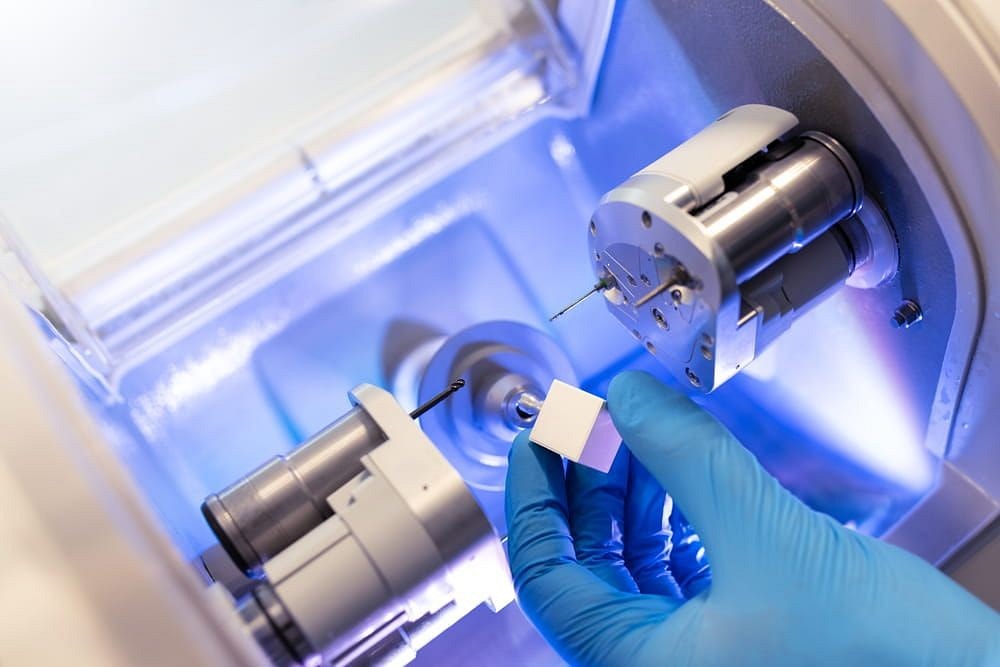
Dentistry has always depended on precision. Even small differences in the shape, position, or fit of a restoration can affect how a person bites, speaks, cleans their teeth, and feels about their smile. Today, digital technologies are giving dental professionals increasingly sophisticated ways to plan and create restorations with a high degree of accuracy. Among the most influential developments are three-dimensional printing and computer-aided design and computer-aided manufacturing, commonly known as CAD/CAM. For patients learning about advanced restorative and implant dentistry, New Teeth Chicago Dental Implants in Chicago, IL, and Dr. Irfan Atcha recognize the value of understanding how these technologies are shaping modern dental care.
Rather than relying exclusively on conventional impressions, hand-shaped models, and laboratory processes, digital dentistry can transform information about a patient’s mouth into detailed computer-based models. Dentists and dental laboratory professionals can then use those models to visualize treatment, design restorations, and manufacture certain dental components. Although the exact technology used varies according to the procedure and individual patient, digital workflows have become an important part of the broader movement toward more personalized and predictable dentistry.
CAD/CAM dentistry combines two related processes. Computer-aided design, or CAD, allows a dental professional or laboratory technician to create a digital representation of a restoration. Computer-aided manufacturing, or CAM, uses that digital design to help produce the restoration. Depending on the system and treatment, the manufacturing stage may involve milling a restoration from a solid block of material or using other fabrication methods.
A digital workflow often begins with detailed information about the patient’s teeth and surrounding oral structures. An intraoral scanner may capture thousands of images or data points and combine them to create a three-dimensional representation of the mouth. The digital model can be viewed from different angles, enlarged, and analyzed on a computer. This can help with evaluating the dimensions and relationships between teeth before a restoration is manufactured.
CAD/CAM technology has applications across several areas of restorative dentistry. It may be used in the design or production of Crowns and Bridges, as well as certain inlays, onlays, veneers, and implant-related restorations. The specific workflow depends on the clinical situation, materials selected, equipment available, and complexity of the case.
Although CAD/CAM and 3D printing are sometimes discussed as if they were the same technology, they describe different parts or methods within digital dentistry. Traditional milling is generally considered a subtractive process because a restoration is shaped by removing material from a larger block. Three-dimensional printing is an additive manufacturing process. A digital design is converted into a physical object by adding material in successive layers.
In dentistry, 3D printers can be used to manufacture a variety of items, depending on the printer, material, regulatory requirements, and intended clinical application. Examples may include dental models, surgical guides, temporary restorations, denture components, orthodontic models, and other treatment-planning tools. The technology allows detailed digital designs to become physical objects that clinicians can use during different stages of care.
The advantages extend beyond simply creating an object quickly. Because the printed item originates from a digital file, clinicians and laboratory professionals can make precise design adjustments before fabrication. Digital files may also make it easier to reproduce or modify certain components when clinically appropriate. This combination of digital planning and physical manufacturing is one reason 3D printing has become increasingly significant in dentistry.
Implant dentistry is an area where digital technology can be particularly valuable because successful treatment requires careful consideration of anatomy, prosthetic design, and implant positioning. Three-dimensional imaging can provide information about available bone, nearby anatomical structures, and the planned location of replacement teeth. Digital planning software may then help the dental team evaluate potential implant positions in relation to the final restoration.
For treatments such as Same-Day Dental Implants or All-On-4 Implants, planning involves much more than determining where an implant can physically fit. The position and angle of implants can influence the design of the prosthetic teeth, bite forces, cleaning access, and overall function. Digital workflows can help clinicians consider the restorative goal while evaluating the surgical plan.
Three-dimensional printing may also be used to produce surgical guides. These guides are designed using digital treatment-planning information and can help transfer the virtual plan to the clinical setting. A surgical guide does not replace the clinician’s judgment or experience, but it can serve as one component of a carefully planned implant procedure.
A well-designed dental restoration must do more than look natural. It needs to fit properly, interact appropriately with neighboring and opposing teeth, and support comfortable function. CAD software allows the restoration to be evaluated digitally before it is manufactured. The shape, contours, contact points, and bite relationships can be adjusted based on the available digital information.
This process can be useful for restorative treatments ranging from individual crowns to more extensive Full Mouth Reconstruction. In complex cases, multiple teeth and bite relationships may need to be considered together. Digital models can give clinicians another way to study how planned changes may interact across the mouth rather than viewing each tooth completely in isolation.
Digital technology can also play a role in cosmetic treatment planning. When considering restorations such as Veneers, digital design tools may help evaluate tooth proportions, contours, and relationships with surrounding teeth. However, technology does not determine what constitutes an attractive or appropriate smile. Facial features, oral health, function, patient preferences, and clinical judgment remain essential parts of individualized planning.
One of the most noticeable changes for some patients is the increased use of intraoral scanners. Conventional impressions typically require trays filled with impression material to remain in the mouth while the material sets. Digital scanning provides another method of recording the surfaces of teeth and oral structures. A small scanning device is moved around the mouth while software constructs a digital model.
For patients who have difficulty tolerating traditional impression materials, digital scanning may provide a more comfortable experience when it is appropriate for the procedure. It can also allow the clinician to examine the scan immediately. If an area was not captured adequately, the missing information may be rescanned rather than necessarily repeating an entire conventional impression.
Patients may also benefit from being able to see digital images and models of their own mouths. Viewing a three-dimensional model can make explanations about tooth wear, missing teeth, restoration design, or implant planning easier to understand. Technology therefore serves not only as a manufacturing tool but also as a way to improve communication between patients and dental professionals.
Digital planning becomes especially valuable when tooth replacement involves significant anatomical or restorative complexity. Patients who have lost many teeth may need treatment that accounts for available bone, facial support, bite relationships, prosthetic space, and long-term maintenance. Digital imaging and design tools can help organize this information into a coordinated treatment plan.
For example, treatment concepts involving Implant Supported Dentures or Fixed Dentures require careful coordination between implant placement and the prosthesis that will eventually attach to those implants. Designing the teeth and evaluating implant positions digitally can help clinicians work backward from the intended restorative result.
More advanced situations may involve Zygomatic Implants, which are longer implants that engage the cheekbone and may be considered in selected patients with severe upper-jaw bone loss. These cases involve complex anatomy, making detailed imaging, planning, and experienced clinical decision-making particularly important. Digital tools can provide valuable information, but they remain part of a larger diagnostic and surgical process.
The growing capabilities of 3D printers, scanners, and CAD/CAM software can make dentistry appear increasingly automated. In reality, technology is most useful when combined with careful diagnosis and professional judgment. A computer can process measurements and manufacture a design, but it cannot independently determine whether a particular restoration or treatment approach is appropriate for an individual patient.
Dentists must still evaluate gum health, bone support, tooth structure, bite forces, medical history, oral hygiene, aesthetic goals, and numerous other factors. Materials also have different mechanical and aesthetic characteristics, meaning that choosing what to manufacture can be just as important as determining how it is manufactured. Digital accuracy cannot compensate for an inappropriate diagnosis or treatment plan.
Patients should therefore think of digital dentistry as a set of tools rather than a replacement for expertise. The technology can provide clinicians with additional information, improve visualization, support communication, and help manufacture highly detailed dental components. The ultimate success of treatment still depends on thoughtful planning, appropriate case selection, quality materials, skilled execution, and long-term patient care.
Dental technology continues to evolve rapidly. Advances in scanners, design software, artificial intelligence, materials science, milling equipment, and 3D printing are expanding what digital workflows can accomplish. Future systems may further improve the speed with which dental information can be collected, analyzed, and transformed into customized restorations.
Materials are another important area of development. As printable and millable dental materials improve, their potential applications may expand. Researchers and manufacturers continue to study characteristics such as strength, wear resistance, accuracy, biocompatibility, appearance, and long-term performance. These factors are critical because a dental restoration must withstand a challenging environment involving moisture, temperature changes, chewing forces, and bacterial exposure.
The future is therefore not simply about making dental care faster. The larger goal is to use technology to make planning more informed, manufacturing more precise, communication clearer, and treatment increasingly personalized. Patients will likely encounter digital tools at more stages of dental care as these technologies continue to mature.
For patients, knowing that a dental office uses a scanner, CAD/CAM system, or 3D printer is only the beginning. It is reasonable to ask how the technology contributes to a particular treatment, what materials will be used, how the restoration is designed, and what factors affect its expected longevity. Different technologies are appropriate for different clinical situations, so there is rarely a single digital workflow that is ideal for every patient.
Ultimately, 3D printing and CAD/CAM are changing how dentists can visualize anatomy, plan procedures, communicate with patients, and create customized dental restorations. They are especially influential in restorative and implant dentistry, where precision and coordination can affect both function and appearance. For individuals researching modern dental care in Chicago, New Teeth Chicago Dental Implants and Dr. Irfan Atcha can serve as part of the broader conversation about how advances in dental technology continue to shape the way smiles are planned, restored, and maintained.
Revilla-León, M., & Özcan, M. (2019). Additive Manufacturing Technologies Used for Processing Polymers: Current Status and Potential Application in Prosthetic Dentistry. Journal of Prosthodontics.
Dawood, A., Marti Marti, B., Sauret-Jackson, V., & Darwood, A. (2015). 3D Printing in Dentistry. British Dental Journal.
Miyazaki, T., Hotta, Y., Kunii, J., Kuriyama, S., & Tamaki, Y. (2009). A Review of Dental CAD/CAM: Current Status and Future Perspectives from 20 Years of Experience. Dental Materials Journal.



