

Published
7 minute read
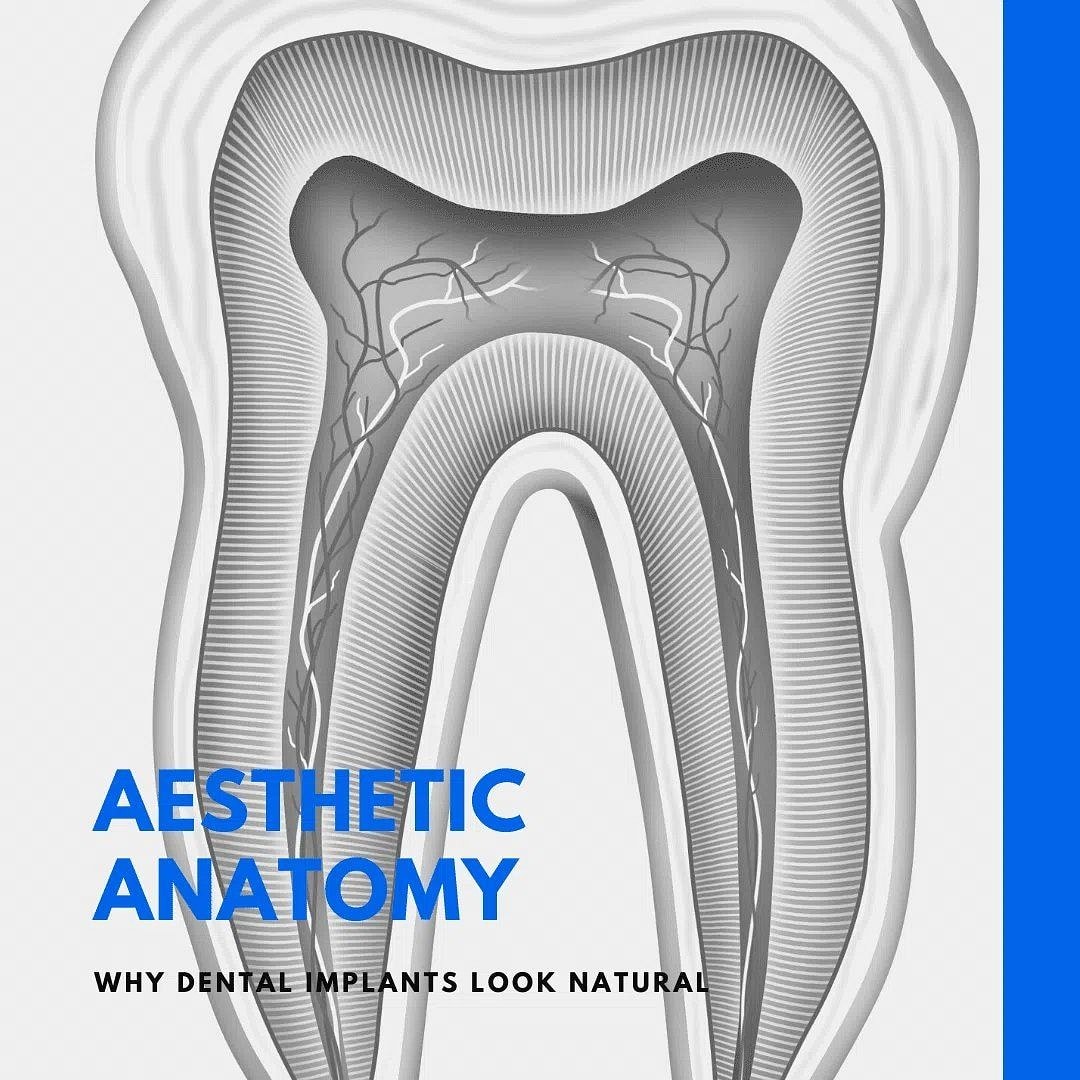
Nowadays if you are looking for a way to replace missing teeth, dental implants are a common recommendation. You may not be able to tell by looking at them, but many people have dental implants. In fact, the American Academy of Implant Dentistry notes that as many as 3 million Americans have dental implants, with approximately 500,000 new implants being placed yearly. One reason for their growing popularity is because dental implants can provide a natural-looking tooth replacement and they are the best option for patients who need teeth restored following an injury or disease.
Out of the various tooth-replacement options, dental implants are considered the most aesthetic simply because they look the most like natural teeth. Since a lot of what we consider “aesthetic” is based upon the idea that dental restorations must look as natural as possible, let’s take a brief look at some basic tooth anatomy:
For starters, there are three layers that make up a single tooth. These include:
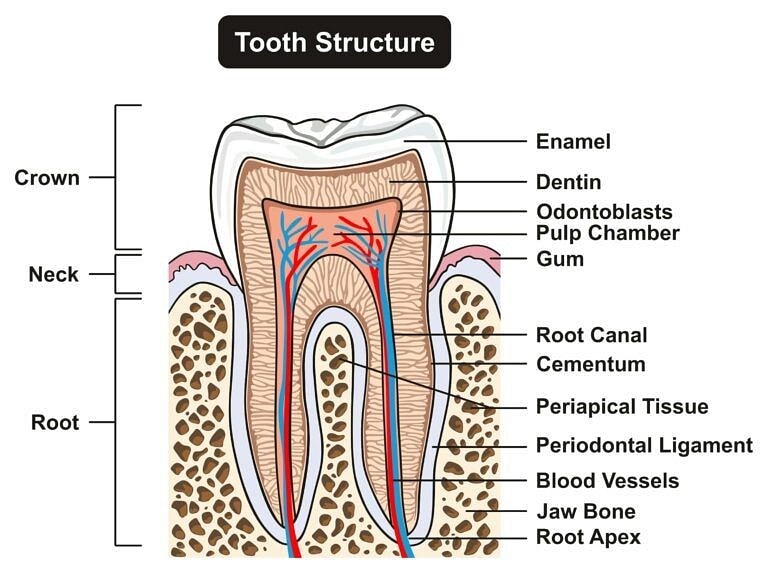
In addition to the three layers that make up a single tooth, there are different parts of the tooth, including:
Now that we understand the basics of tooth anatomy, we can look at the way dental implants are structured. Each part of a dental implant plays an integral role in achieving a natural look, which is why dental implants are one of the best ways to replace missing teeth.
There are three main parts of a dental implant. These parts include:
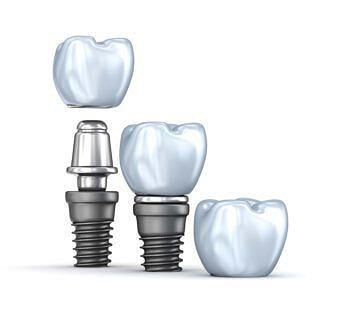
When compared to other tooth-replacement options, dental implants are generally considered to be more aesthetic because of this structure. In fact, there are a few key parallels between the structure of a dental implant and the anatomy of a natural tooth. For example, the dental restoration (crown, bridge, or denture) functions as the crown, or visible portion of the tooth, while the abutment could be argued to function as the neck of the tooth.
Other tooth replacement options, such as traditional bridges and dentures, also contain artificial “crowns”. A dental bridge may contain one or more fake teeth used to mimic the appearance of the natural teeth, while a denture contains an entire arch of fake teeth. Nowadays, both bridges and dentures are fabricated to be highly aesthetic as well, however their structure only mimics the crown, which is only one-third of natural tooth anatomy.
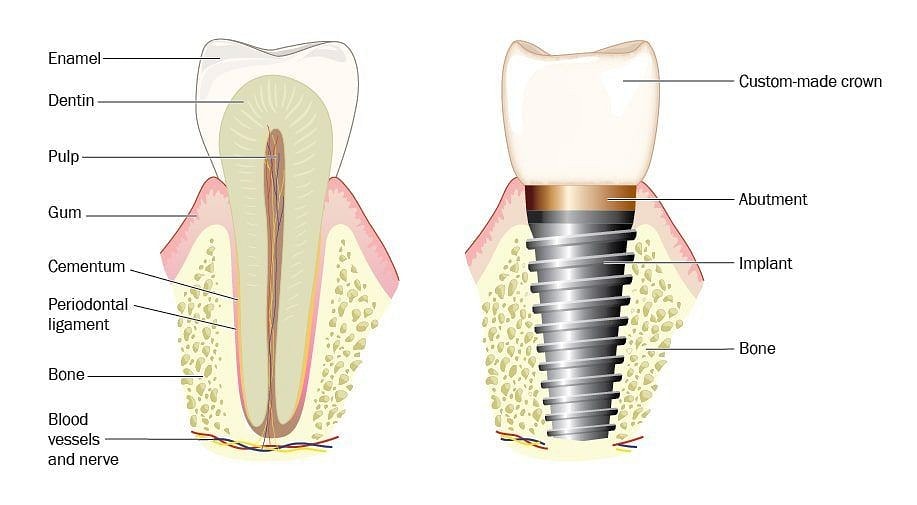
The other two-thirds of a natural tooth is the tooth root. Since the titanium implant is placed into the jawbone so that it can fuse with the surrounding bone, it acts like a natural tooth root. Although they are not visible, the tooth roots play a few key roles. For starters, tooth roots are associated with chewing force. Because of this, dental implants can restore almost all of your natural chewing function. Although dental bridges and dentures can restore some of your natural chewing function, they cannot offer the same results simply because they lack the equivalent of a tooth root.
Not only do dental implants restore chewing function, but the implant also provides jawbone stimulation in the same way the natural tooth roots would. Every time you bite down, the tooth roots transfer the force to the jawbone. This constant, recurring force maintains bone mass, which also maintains your facial contour. When one or more teeth are lost, there are no longer roots that stimulate the jawbone. As a result, the body essentially takes bone mass from the jaw and dispenses it to other areas of the body. This causes the jawbone to deteriorate, which also changes your facial contour.
By mimicking the anatomy of natural teeth, dental implants also mimic the appearance of natural teeth. This makes them appear more aesthetic overall when compared to other tooth replacement options like traditional bridges or dentures. Additionally, the anatomy of dental implants also allows them to be more functional, which preserves natural chewing function, as well as the structural integrity of the jawbone over time. Overall, dental implants are the most aesthetic tooth replacement option in both the short and long term.



